
The Work of Their Hands
Not too long ago, after finishing our meals at the hawker centre, we would simply leave our plates, bowls, and cups on the table for the cleaners to clear away before the next group of diners arrived. Today, things have changed. We now return our trays and used utensils to the designated collection points before leaving. It has become part of our shared responsibility to help keep our hawker centres clean, pleasant, and welcoming for everyone.
Yet even with this change, the work of the cleaners remains as important as ever. They continue to wipe the tables, collect and sort the returned trays, transport them to the washing area, and ensure that the dining environment stays clean and hygienic throughout the day. Their work is often unnoticed because it is done quietly, efficiently, and faithfully. It is easy to enjoy a clean table, a tidy hawker centre, and a pleasant place to eat without giving much thought to the people whose daily labour makes it all possible.
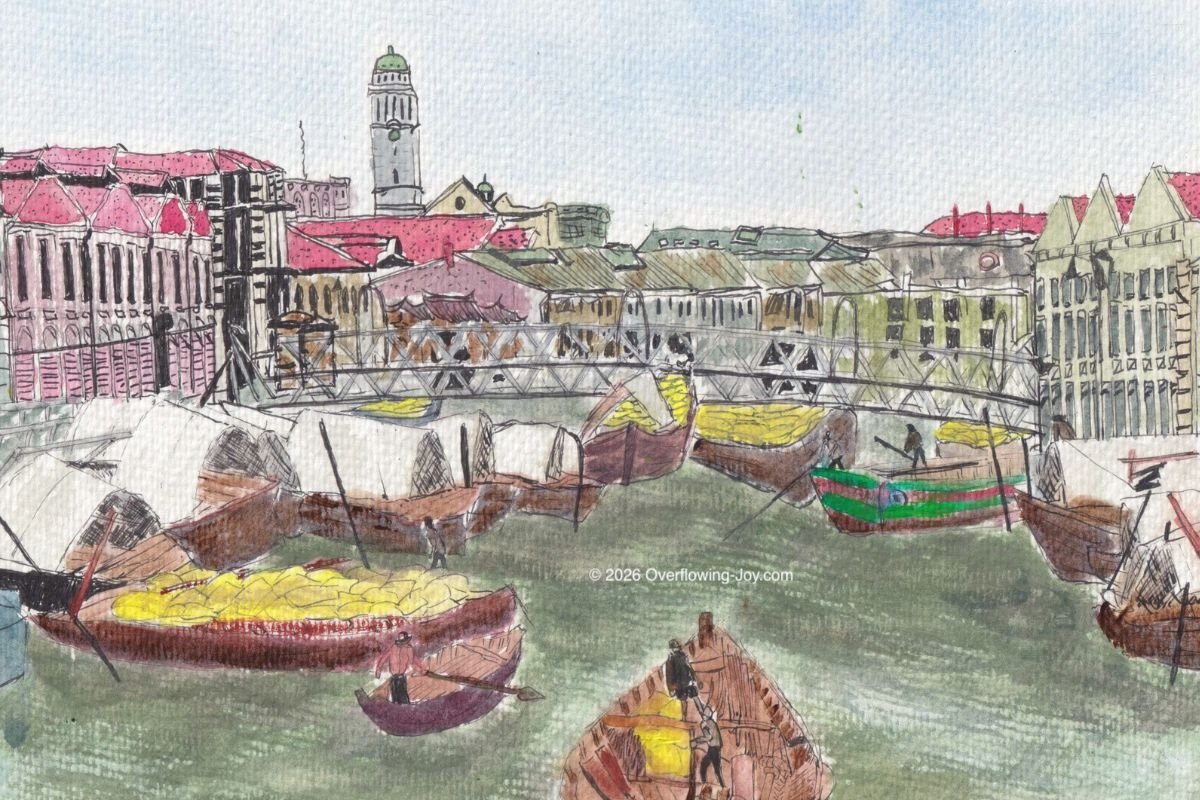
Their faithful service reminds us that many of life’s greatest blessings come through the ordinary work of ordinary people. Every day, God cares for us through the hands of others, those who clean our streets, maintain our parks, deliver our parcels, prepare our food, and perform countless unseen tasks that make our lives safer, healthier, and more comfortable. Most of them work without applause or recognition, yet their diligence reflects God’s Long ago, our forefathers arrived in this land with little more than courage, determination, and hope for a better tomorrow. They worked hard, often under difficult and uncertain conditions, not only to provide for their families but also to build a better future for the generations who would come after them. They toiled under the hot sun, worked long hours, and some even risked their lives on unsteady boats and in dangerous waters. They endured hardships that many of us today can scarcely imagine.
Generations have passed so quickly. Today, we live in a nation that is safer, more prosperous, and filled with opportunities that our forefathers could only have dreamed of. We work in air-conditioned comfort, travel on modern roads and efficient public transport, and enjoy beautiful buildings, pleasant surroundings, well-maintained parks, and countless facilities that make our daily lives more comfortable.
Yet, even with all that we have inherited, we continue to work and make sacrifices for the generations yet to come. This is part of the wonderful rhythm of life: we receive, we give, and we pass on. The blessings we enjoy today did not begin with us, and they are not meant to end with us.
The faithful service of our forefathers reminds us that many of life’s greatest blessings come through the sacrificial efforts of people who may never receive recognition for what they have done. Behind the comforts we often take for granted are countless people who have quietly given their time, strength, and energy for the good of others.
Every day, God cares for us through people who serve in ways both visible and unseen. Some toil under the hot sun. Others clean our streets, maintain our parks, tend our gardens, deliver our parcels, prepare our meals, care for the elderly, build our homes, repair our roads, and keep our communities running. Their work may seem ordinary, but without their faithful service, our lives would be very different.
Most of them do their work without applause or recognition. Yet through their diligence, we catch a glimpse of God’s loving kindness and His provision for us. In their quiet service, we are reminded of Christ, who did not come to be served, but to serve. Their hands, in ways they may not realise, become part of the way God blesses and cares for His people.
As we pause to reflect on God’s goodness, may we never take these everyday blessings for granted. May we remember with gratitude those who came before us, those who serve us today, and those who are quietly preparing the way for tomorrow.
And may God’s blessings upon us never become blessings that we keep only for ourselves.
We are blessed so that we may become a blessing.
May the Lord use what He has given us, our time, experience, resources, skills, wisdom, and even the stories of our lives to bless our children and grandchildren, the younger generations, our neighbours, and those around us. We may not be able to build great things or change the whole world, but we can leave behind something precious: a legacy of kindness, faithfulness, generosity, encouragement, and love.
A warm smile may brighten someone’s day. A sincere “thank you” may remind a worker that their efforts are valued. A listening ear may bring comfort to someone who feels forgotten. A word of encouragement may give a younger person courage to keep going. Sharing our experiences, both our successes and our mistakes may help the next generation walk more wisely than we did.
As God has cared for us through the loving service and sacrifices of others, may our lives become channels of His grace to those who come after us and those who walk beside us today.
May we not simply ask, “What blessings have I received?” but also, “Whom can I bless with what God has given me?”
For the greatest legacy we can leave is not what we accumulate, but what we give away in love.
May our hands continue to serve, our hearts remain grateful, our words bring encouragement, and our lives reflect the goodness of God. And when future generations look back, may they be able to say that, because of God’s loving kindness, we received His blessings with grateful hearts and passed them on with generous hands.
Blessed by God. Grateful for yesterday. Faithful today. A blessing for tomorrow.
Bible Verse:
Establish also the work of our hands for us—yes, establish the work of our hands.
Psalm 90:17 WEB
Blessings:
God blesses the work of our hands not merely so that we may have more, but so that through our hands, others may receive His goodness.
Reflection Point:
The food we eat, homes we live in, roads we travel, parks we enjoy, and services we receive are blessings made possible by the work of many. Gratitude helps us see the goodness of God in everyday life.
Reflection Question:
God has blessed us through the hands of others. How might He use our hands to bless someone else today?
Action to Consider for this week:
Share your time, lend a helping hand, encourage someone, teach what you know, or simply show appreciation.
Hymn for the Reflection
Take My Life and Let It Be
Hymn Writer
Frances Ridley Havergal (1836–1879) was one of England’s most gifted Christian hymn writers, poets, and devotional authors. Born into a deeply Christian family, she displayed remarkable musical and literary abilities from an early age. She became an accomplished pianist and singer, mastered several languages, and had an exceptional memory, committing large portions of the Bible to heart.
Havergal believed that every talent and opportunity should be used for God’s glory. Her writings consistently encouraged believers to live lives of joyful devotion and wholehearted surrender to Christ.
Although she died at the age of forty-two, her hymns continue to inspire Christians around the world. Among her best-known works are “Take My Life and Let It Be,” “Like a River Glorious,” and “Lord, Speak to Me, That I May Speak.”
The Story Behind the Hymn
The hymn was born from a deeply personal experience of spiritual renewal.
In February 1874, Frances Havergal visited the home of ten friends. During her stay, she prayed earnestly that God would work in each of their lives and draw them into a closer relationship with Christ.
By the end of her visit, she believed that every member of the household had experienced a renewed commitment to the Lord.
Filled with gratitude and joy, Havergal returned home. She later wrote that she found herself “too happy to sleep.” Instead, she spent the evening reflecting on what God had done. Out of that joyful experience came the words of “Take My Life and Let It Be.”
She later explained that the hymn was her own personal prayer of consecration. Each verse offers another part of life to God—our hands, our feet, our voice, our possessions, our mind, our will, and finally our heart. It is not merely a hymn about service; it is a hymn about offering every aspect of life to God.
Years later, Havergal herself acted on the words she had written. She gave away many of her valuable jewellery items to support Christian mission work, saying she could no longer keep treasures that might be used for God’s kingdom. For her, the hymn was not just poetry—it was the pattern of her life.