
Still
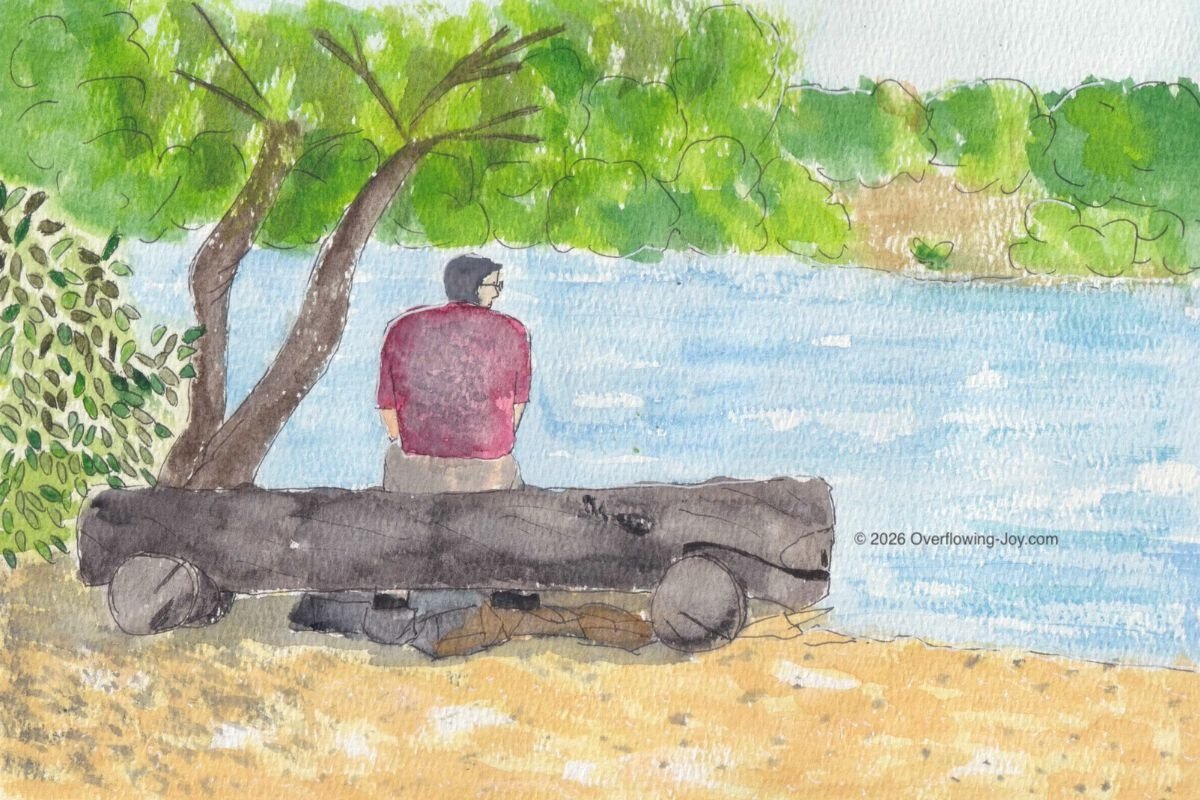
An elderly man sitting quietly beside a lake offers a beautiful picture of a life that has learned to appreciate peace, stillness, and reflection. There is something deeply calming about simply sitting beside the water, watching the gentle ripples spread across its surface, listening to the occasional call of a bird, and allowing the mind to become quiet. Perhaps he is remembering the past, giving thanks for the present, or simply enjoying the gift of another peaceful day. In such moments, we are reminded that contentment is not always found in having more, achieving more, or going further. Sometimes it is found in learning to appreciate what is already before us. In a world that constantly urges us to hurry, such quiet moments invite us to slow down, breathe deeply, and notice the simple gifts of grace that God has already placed around us.
Looking at how far our nation has come, it is easy to believe that our progress and success are entirely the result of human effort. We work hard, plan carefully, educate ourselves, make wise decisions, and take every opportunity to improve our lives. These are important and necessary, and we should never despise the value of diligence. Yet, as people of faith, we must also pause and remember that behind every opportunity is God’s providence. Behind every ability is a gift. Behind every open door is an opportunity that He has allowed us to receive. The strength to work, the wisdom to make decisions, the health and relationships we enjoy, and even the circumstances that enable us to prosper are ultimately blessings for which we can give thanks. We may work with our hands, but it is God who gives us the grace, strength, and opportunities to do so.
Stillness, however, is not the same as inactivity, and neither is it hopelessness. There are seasons when life becomes quieter, when our plans slow down, when familiar responsibilities change, or when our prayers seem to linger without an immediate answer. These seasons can sometimes make us wonder whether God is still working. Yet Scripture reminds us that God’s presence does not depend on how much we can see or accomplish. In the quietness, He may be doing some of His deepest work within us. He teaches us to listen rather than always speak, to trust rather than always control, and to rest rather than constantly strive. Sometimes God does not change our circumstances immediately because He is first changing our hearts.
Perhaps this is one of the great lessons of growing older. We begin to understand that a meaningful life is not measured only by what we have achieved, accumulated, or accomplished, but by how faithfully we have used what God has entrusted to us. The years behind us contain both successes and failures, opportunities taken and opportunities missed. Yet God’s grace has been present through them all. He has patiently shaped us through our experiences, corrected us when we wandered, strengthened us when we were weak, and continued to give us opportunities to serve and bless others. We may look back and see our own efforts, but when we look more deeply, we can also see His gracious hand accompanying us throughout the journey.
God’s grace is not given merely for our own comfort or prosperity. The blessings we receive are also opportunities to become a blessing to others. The wisdom He has given us can guide someone who is struggling. The resources He has entrusted to us can meet another person’s need. The experiences we have gained can encourage the next generation. The time we now have can be given to someone who is lonely. Even our past mistakes can become lessons through which others may find wisdom and hope. When we recognise that our lives belong to God, our plans begin to change. We no longer ask only, “What can I achieve for myself?” but also, “Lord, how can You use what You have given me to bless someone else?”
As we move forward, may our lives be increasingly centred on God and aligned with His purposes. Let us continue to work diligently when He gives us opportunities, but also learn to pause when He calls us to be still. Let us use the wisdom He has given us, not merely to build a better life for ourselves, but to build others up. Let us receive His blessings with gratitude, hold them with humility, and share them with generosity. Like the quiet man beside the lake, may we learn to sit peacefully in God’s presence, look back with gratitude, look around with contentment, and look ahead with faith knowing that the God who has carried us this far will continue to lead us, and that our greatest purpose is to become faithful instruments of His love, peace, grace, and blessing wherever He places us.
Bible Verse:
Trust in Yahweh with all your heart,
and don’t lean on your own understanding.
In all your ways acknowledge him,
and he will make your paths straight.
Proverbs 3:5–6 WEB
Blessings:
May we rest in God’s grace, grateful for His faithful care, trusting Him with our future, and becoming a channel of His grace and kindness to others.
Reflection Point:
Recognise God’s grace in the blessings, strength, opportunities, and second chances He has graciously given us throughout our lives.
Reflection Question:
Where have I experienced God’s grace in my life, and how can I extend that same grace to someone else this week?
Action to Consider for this week:
Think of someone who has blessed, helped, forgiven, or encouraged you. Take a moment to thank them—or, if someone is struggling, offer them the same patience, kindness, forgiveness, or encouragement that God has graciously given you.
Hymn for the Reflection
Dear Lord and Father of Mankind
Hymn Writer
John Greenleaf Whittier (1807–1892) was one of America’s most respected poets and a devoted member of the Religious Society of Friends, commonly known as the Quakers.
Born on a farm in Massachusetts, Whittier had only limited formal education, yet his love for literature led him to become a celebrated poet and writer. Alongside his literary work, he was a passionate advocate for the abolition of slavery and used his writing to promote justice, peace, and Christian compassion.
His Quaker faith deeply influenced his poetry. Quakers emphasise simplicity, humility, silence, and attentiveness to God’s inner leading rather than elaborate rituals. These themes are beautifully reflected in Dear Lord and Father of Mankind.
The Story Behind the Hymn
Unlike many hymns, “Dear Lord and Father of Mankind” was not originally written as a hymn.
It first appeared in 1872 as part of Whittier’s long narrative poem “The Brewing of Soma.” The poem tells the story of an ancient Indian legend in which priests use an intoxicating drink called soma in an attempt to achieve spiritual enlightenment.
Whittier contrasts this artificial excitement with the quiet, genuine peace that comes from God. The final six stanzas of the poem form a heartfelt prayer asking God to free His people from restless striving and lead them into a life of calm trust and faithful obedience.
Years later, these concluding stanzas were set to music and became the beloved hymn we know today.
The hymn’s most memorable lines express its central message: “Drop Thy still dews of quietness,
Till all our strivings cease.”
These words have brought comfort to generations of Christians seeking God’s peace amid the pressures of everyday life.